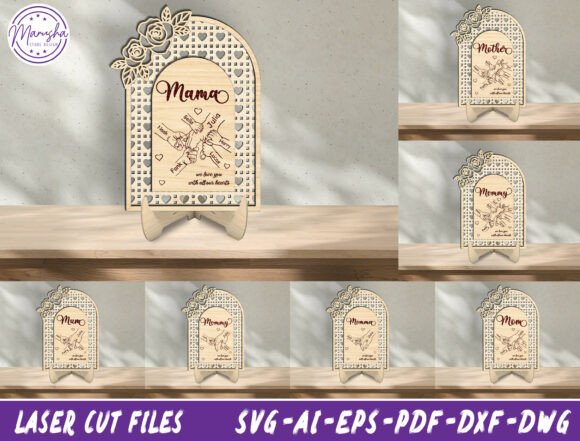
Reviewing the Personalized Mother’s Day Laser Cut File
As a designer who spends half my life in embroidery software and the other half packing orders for small business clients, I am constantly sifting through digital assets. We all know the drill: you find a design that looks stunning in a low-resolution preview, but when you load it into your machine, the details vanish or the stitch density becomes a nightmare. That is why I approach every new asset with a healthy dose of skepticism and a practical eye for real-world application. Recently, I’ve been evaluating the Personalized Mother’s Day Laser Cut File, specifically looking at how this design translates from a digital vector concept into a tangible, high-value handmade product. This isn’t just about aesthetics; it’s about whether this file holds up under the pressure of commercial production and client expectations.
First Impressions and Visual Personality
The moment you open the file, the mood is immediately established. The concept revolves around a touching illustration of hands holding together, symbolizing connection, care, and the foundational bond of motherhood. Visually, this is a strong choice for the Mother S Day market because it taps into an emotional narrative without being overly literal or cliché. The layout feels balanced, with enough negative space to allow for personalization—whether that be adding names, dates, or short phrases—without cluttering the primary motif.
From a design perspective, the shape language is soft and organic. This works exceptionally well for embroidery because it allows for fluid line work rather than rigid geometric constraints. It creates a sense of warmth that aligns perfectly with the target audience: buyers looking for sentimental keepsakes. However, the "Laser Cut" aspect of the title suggests versatility. While primarily intended as an embroidery file, the clean lines also make it suitable for vinyl application or laser cutting on wood and felt, broadening its utility for crafters who offer mixed-media products.
Real-World Application: The Tote Bag Scenario
To truly test this design, I imagined a specific use case: creating a custom embroidered tote bag for a boutique client. This is a staple item for any Etsy seller or small shop product lineup during the spring season. Here is how the Personalized Mother’s Day Laser Cut File performs in that context.
When placed on the front center of a canvas tote, the hand motif serves as a focal point that doesn’t overwhelm the fabric. The visual weight is distributed evenly, which prevents the bag from feeling top-heavy when carried. For the custom apparel decorator, this design also translates beautifully to sweatshirts and aprons. On a heather grey sweatshirt, for example, using a cream or blush thread palette enhances the softness of the hand illustration, creating a premium look that justifies a higher price point. The design’s simplicity ensures that even if the customer chooses a busy background fabric, the embroidery remains legible and striking.
I also considered its potential as a personalized gift for baby items. A onesie or a nursery blanket featuring these hands offers a tender, timeless aesthetic. It moves beyond trendy graphics and into the realm of heirloom quality, which is exactly what discerning parents look for. The design’s adaptability means it can be scaled down for a chest pocket placement or enlarged for a full-back statement piece on a hoodie, maintaining its integrity across different sizes.
Where Caution Is Required
No design is flawless, and knowing where to exercise caution is part of professional judgment. There are specific scenarios where this machine embroidery design requires careful handling:
- Small Hoop Sizes: If you attempt to digitize or embroider this design in a very small hoop (under 4x4 inches), the fine details of the fingers may merge. You must ensure the scale is large enough to preserve the distinction between the hands.
- Textured Fabrics: While the design looks great on smooth cotton or canvas, textured fabrics like bouclé or heavy chenille can obscure the finer lines. In such cases, the stitch density might struggle to anchor properly, leading to puckering or lost detail.
- Stretchy Fabrics: When working with jersey knits or stretchy cap materials, proper stabilizer usage is non-negotiable. Without adequate support, the tension of the satin stitch outlines could distort the hand shapes, making them appear warped after washing.
- Dense Stitch Areas: If the design includes significant fill stitches, always check the underlay. Dense areas on thin fabrics can create a stiff, cardboard-like feel, which reduces the comfort of wearable items like caps or baby clothes.
Technical Considerations for the Designer
Before committing to a production run, there are several technical steps any serious maker should take. First, inspect the design assets in black and white mockups. This helps verify that the contrast between the thread colors and the fabric will remain clear regardless of lighting conditions. If the design relies on subtle tonal shifts, it may not read well on dark fabrics unless you use a high-density underlay or a contrasting base thread.
Testing on scrap fabric is equally critical. Run the design through your machine to evaluate the thread colors in motion. Does the running stitch flow smoothly? Are the corners sharp, or do they round off due to thread pull? These nuances determine the professionalism of the finished product. Additionally, confirm whether the file is optimized for both personal and commercial embroidery projects. Licensing terms vary widely, and ensuring you have the right to sell finished goods made from this digital embroidery file protects your craft business from legal issues.
Enhancing Value and Customer Trust
A well-executed embroidery project does more than just look good; it builds brand consistency and customer trust. When a buyer receives a handmade product where the stitching is clean, the alignment is precise, and the sentiment is clear, they are more likely to leave positive reviews and return for future purchases. The Personalized Mother’s Day Laser Cut File supports this by offering a versatile foundation that allows makers to add their own branding touches, such as custom monograms or date stamps, without disrupting the core artwork.
For printable mockups and design previews, this design’s clean lines make it easy to visualize on various backgrounds. This is invaluable for digital product sellers who need to showcase their offerings online. High-quality visuals drive engagement, and a design that communicates emotion clearly—like the embrace of hands—resonates faster than abstract patterns. It tells a story before the customer even reads the product description.
Final Verdict
The Personalized Mother’s Day Laser Cut File is a thoughtful addition to any designer’s library. It balances emotional resonance with practical design elements, making it suitable for a wide range of applications, from tote bag design to holiday embroidery gifts. Its strength lies in its adaptability and clarity, provided that the maker respects the technical limitations regarding fabric type and hoop size. By testing thoroughly and choosing appropriate threads and stabilizers, you can transform this digital asset into a cherished personalized gift that stands out in a crowded marketplace. It is a reliable tool for elevating your small business merchandise and connecting with customers who value heartfelt, well-crafted details.