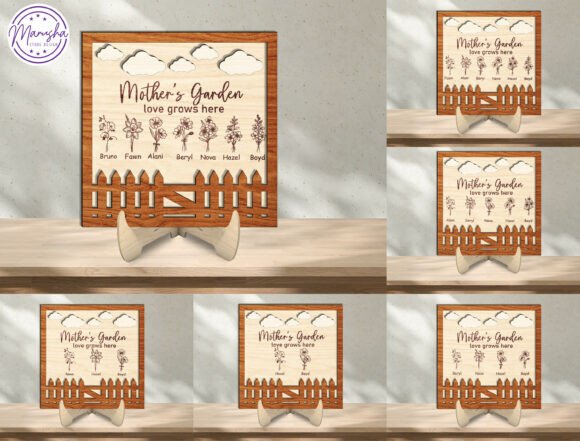
Personalized Grandma s Garden Lasercut Review
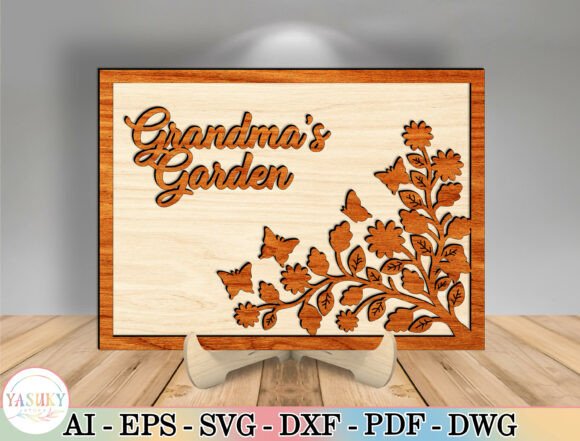
As a designer who spends half my day digitizing files and the other half troubleshooting why a client’s machine ate their favorite thread, I approach every new design asset with a mix of curiosity and skepticism. When I first pulled up Personalized Grandma s Garden Lasercut, I wasn’t just looking at a pretty picture; I was mentally mapping out stitch paths, evaluating fabric tension, and imagining how this would translate from a digital vector to a tangible, stitched reality. The description highlights it as a "beautiful layered sign SVG" featuring a floral branch, but for those of us in the embroidery business, the real story is in the execution potential.
This isn’t just another generic floral clipart file. It carries a specific mood—warm, nostalgic, and distinctly domestic. That emotional resonance is exactly what sells handmade goods on platforms like Etsy or at local craft fairs. However, translating that visual warmth into a physical product requires careful planning. Below, I break down how this design performs in real-world scenarios, where it shines, and where you need to tread carefully if you want your finished product to look professional rather than amateurish.
The First Impression: Mood and Visual Personality
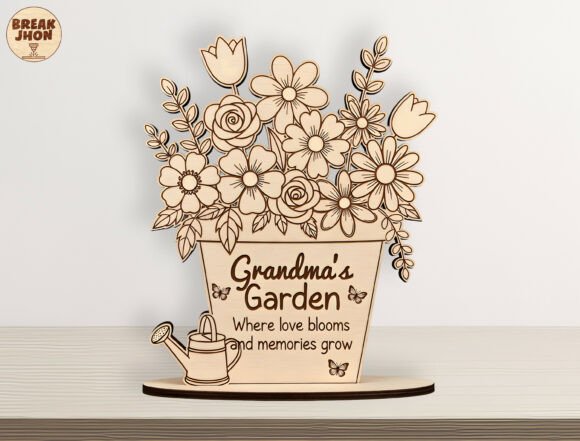
The immediate appeal of Personalized Grandma s Garden Lasercut lies in its organic flow. The "charming floral branch" mentioned in the description suggests a design that avoids rigid geometric constraints, favoring a more natural, sprawling aesthetic. This is crucial for embroidery because organic shapes tend to forgive minor stitching inconsistencies better than sharp, architectural lines. The layering implied by the "3D multi-layered" aspect hints at depth, which is a powerful tool in textile design.
For a small business owner, this design feels ready-made for the gift market. It screams "personalized gift." Whether it’s for a grandmother celebrating a milestone birthday, a new mom, or a holiday token of appreciation, the theme is universally likable without being overly sentimental. The visual personality is elegant yet approachable, striking a balance that appeals to both younger crafters making their first project and seasoned entrepreneurs stocking boutique shelves. It feels like a design that belongs on a kitchen towel hanging in a cozy farmhouse or embroidered on the chest of a soft cotton sweatshirt.
Real-World Application: From Screen to Stitch
Let’s talk about how this actually looks when it leaves the hoop. I’ve been thinking through several specific use cases for Personalized Grandma s Garden Lasercut, and the results vary significantly depending on the substrate.
- Custom Apparel and Sweatshirts: This design would excel on mid-weight fabrics. Imagine a heather grey crewneck sweatshirt with the floral branch embroidered across the front pocket area. The layering effect can be achieved through strategic thread color changes, creating a subtle 3D pop without needing actual appliqué layers. For custom apparel, this adds a premium feel that justifies a higher price point.
- Tote Bag Design: Canvas totes are a staple for the craft business. Using Personalized Grandma s Garden Lasercut here requires attention to stitch density. A large, detailed floral branch on a tote needs enough fill stitch coverage to stand out against the coarse canvas weave, but not so much that the bag becomes stiff and unwearable. Placing it centrally or slightly off-center creates a modern, asymmetrical look.
- Baby Embroidery and Nursery Decor: The gentle nature of the floral theme makes it perfect for baby clothes or nursery wall hangings. On delicate baby items, the design’s elegance translates well, provided you use softer thread colors like sage green, dusty rose, or cream. It fits seamlessly into the "boutique branding" aesthetic that parents trust.
- Kitchen Towels and Aprons: These are high-volume, low-complexity products. A smaller version of the branch motif on a tea towel design works beautifully. It’s practical, washable, and visually pleasing. Customers love functional items that double as decor, and this design bridges that gap effectively.
When considering these applications, remember that Personalized Grandma s Garden Lasercut is fundamentally a laser cutting file (SVG) meant to represent an embroidery design. You must ensure the digitization captures the nuance of the layers. If you are selling digital embroidery files, clarity is key. If you are using it to create physical goods, the quality of your stitching will define the final value.
Where to Exercise Caution
No design is flawless in every context. There are specific situations where Personalized Grandma s Garden Lasercut might struggle, and knowing these pitfalls is what separates a pro from a hobbyist.
- Small Hoop Sizes: If the design includes intricate details or tiny lettering (if personalized), shrinking it down too far can result in a muddy mess. Small hoops often compress stitches, causing fine lines to bleed together. Always test the scaled-down version before committing to production.
- Textured and Stretchy Fabrics: While the organic shape helps, textured fabrics like heavy denim or bouclé can hide detail. Similarly, stretchy knits require proper stabilizer support. Without it, the "floral branch" may pucker or distort during the hooping process, ruining the clean lines of the original vector.
- Dense Stitch Areas: If the design relies heavily on fill stitch to create the "3D" look, be mindful of the fabric backing. Too much density on thin fabric can cause puckering. Conversely, on thick fabrics, insufficient density might make the design look sparse and cheap.
- Curved Surfaces: Attempting to embroider this flat, layered design onto a curved surface like a baseball cap or a rounded pillow corner can be challenging. The perspective shift might distort the symmetry of the branch, making it look awkward unless you adjust the placement carefully.
Practical Designer Notes for Execution
To get the most out of Personalized Grandma s Garden Lasercut, follow these practical steps before you start mass-producing your handmade products:
- Test on Scrap Fabric: Never assume a design will work perfectly on your final material. Run a test stitch on the exact fabric type you plan to use. Check for thread breaks, tension issues, and how the colors interact with the fabric dye.
- Review Thread Color Contrast: The beauty of this design lies in its layers. Ensure your chosen thread colors provide enough contrast to distinguish the different elements of the floral branch. Low contrast can flatten the intended 3D effect.
- Check Stitch Density: Look at the digitization closely. Are the satin stitches tight enough? Is the fill stitch balanced? If the density is too high, consider reducing it slightly for better drape and comfort, especially on apparel.
- Inspect Small Details: Zoom in on the digital file. Are there any tiny isolated stitches that might not transfer well? If so, you may need to simplify the design slightly or use a different stitch type for those areas.
- Confirm Licensing: Before listing this as a commercial embroidery item or selling digital downloads, double-check the license terms. Some designs allow personal use only, while others permit commercial sales of finished goods. Clarity here protects your reputation and legal standing.
- Use Proper Stabilizer: The right stabilizer can make or break a project. For lightweight fabrics, use a cut-away stabilizer for durability. For heavier items like tote bags, a tear-away might suffice, but always prioritize stability over convenience.
Ultimately, Personalized Grandma s Garden Lasercut is a versatile and emotionally resonant design asset. It offers strong potential for custom apparel, holiday embroidery, and personalized gifts. By paying attention to fabric choice, stitch density, and proper testing, you can transform this digital concept into a high-quality, market-ready product that customers will love. It’s a solid addition to any designer’s toolkit, particularly for those focused on the Mother S Day season or year-round gifting markets.